Door balance and travel
An opener is not a lifting device. If the door is heavy, sticky, or slams shut, the opener may be overworked. Contractors often start by checking door balance, rollers, hinges, and track alignment.
Serving Cary, North Carolina & surrounding areas
Calls answered around the clock
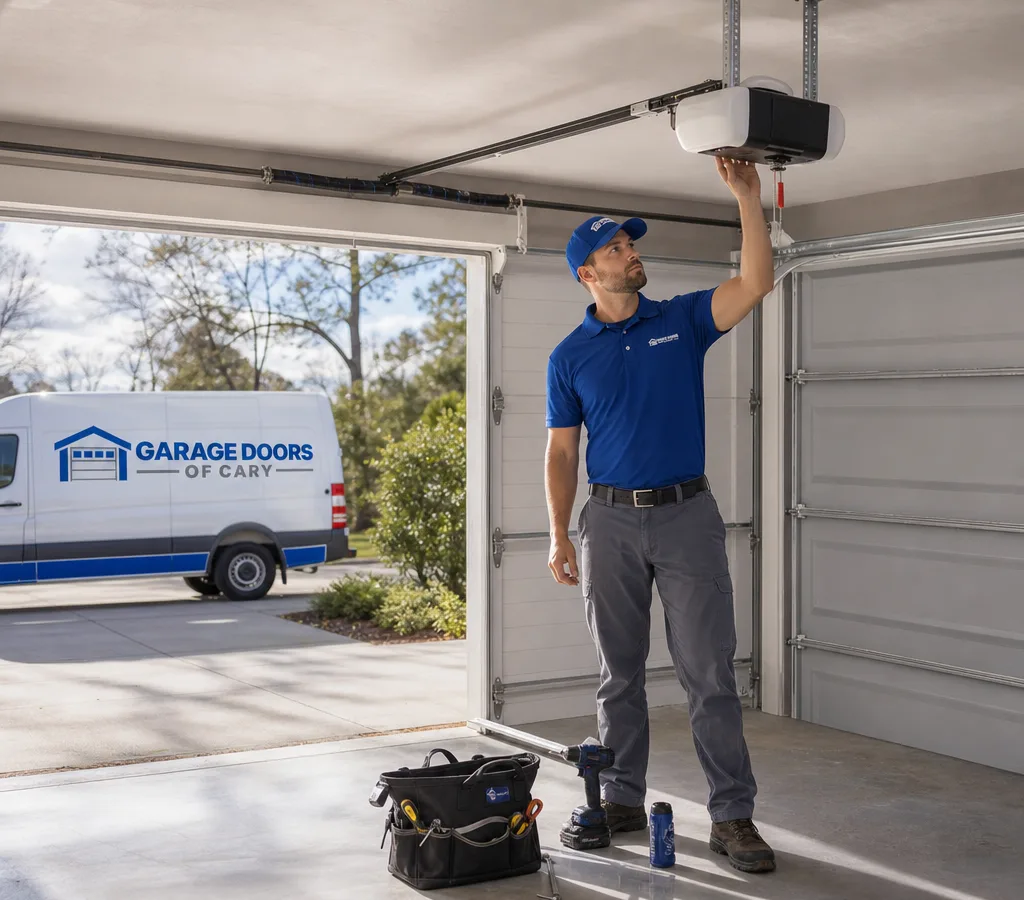
Garage door opener service in Cary, NC
Describe what the opener is doing once and we'll connect you with a local contractor who can troubleshoot, repair, or replace the unit.
✓Describe the symptoms once
✓Connect with a Cary-area contractor
✓Discuss repair or replacement
✓You decide whether to proceed
Opener troubleshooting
Garage door opener problems tend to show up as a handful of repeat symptoms: the door won't move, it reverses, the remote works only sometimes, or the motor runs but the trolley doesn't pull the door.
This is where garage door opener repair matters. A good diagnosis separates a worn drive system from a safety-sensor issue, a damaged logic board from a weak capacitor, or a door that is simply too heavy for the opener because the springs are out of balance.
In Cary, many garages have an opener mounted to a finished ceiling or tucked near attic access, so troubleshooting often includes checking mounting points and vibration, not just the electronics. Another common local scenario is a garage that faces the street and gets daily use for school drop-offs, commuting, and storage access. High cycle counts make wear parts like gears, belts, sprockets, and travel modules the first place a contractor will look.
Garage Doors of Cary is a referral service. You call, describe the symptoms once, and we connect you with a local contractor who handles automatic and smart opener systems. If the fix turns into a garage door opener replacement, the contractor can walk you through options that match your door weight, headroom, and features you actually plan to use.
If the door itself is binding, damaged, or off-track, opener repairs can only go so far. In that case, a contractor may recommend addressing the door first, since an opener isn't designed to compensate for a door that doesn't move smoothly. Some homeowners start with garage door repair when the opener is fine but the door isn't.
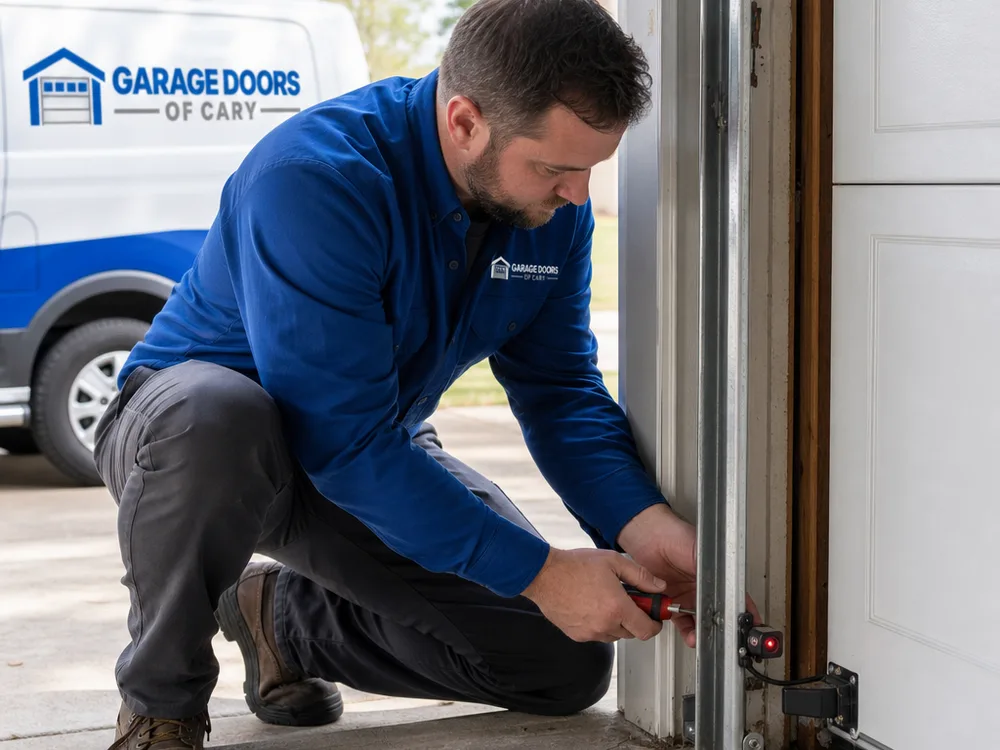
Diagnosis before decisions
An opener is not a lifting device. If the door is heavy, sticky, or slams shut, the opener may be overworked. Contractors often start by checking door balance, rollers, hinges, and track alignment.
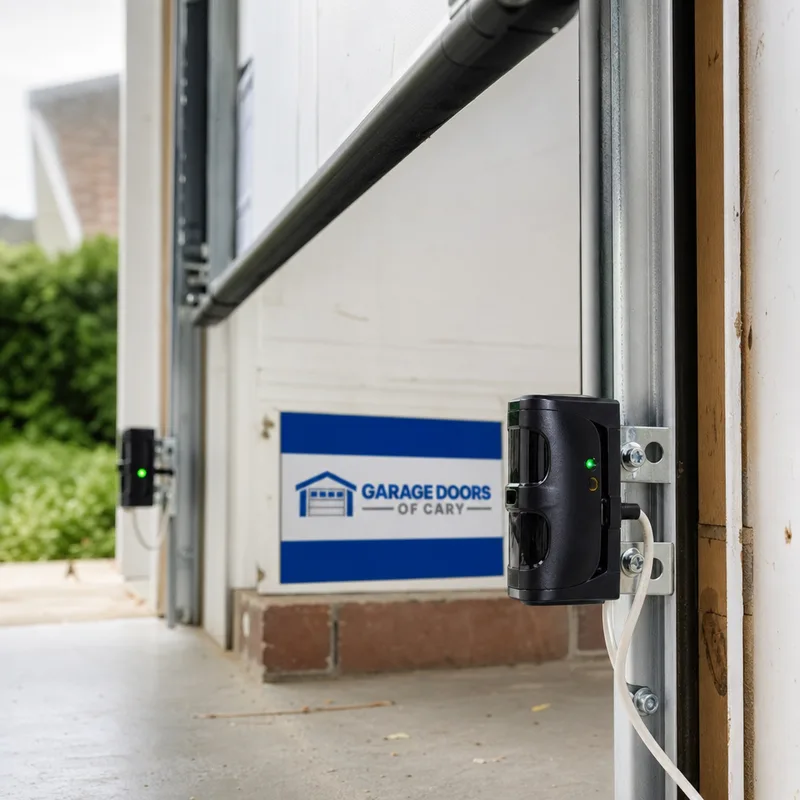
Photo-eyes near the floor can misalign, get blocked, or develop wiring issues. A sensor fault can prevent closing, cause reversing, or trigger blinking lights and beeps.
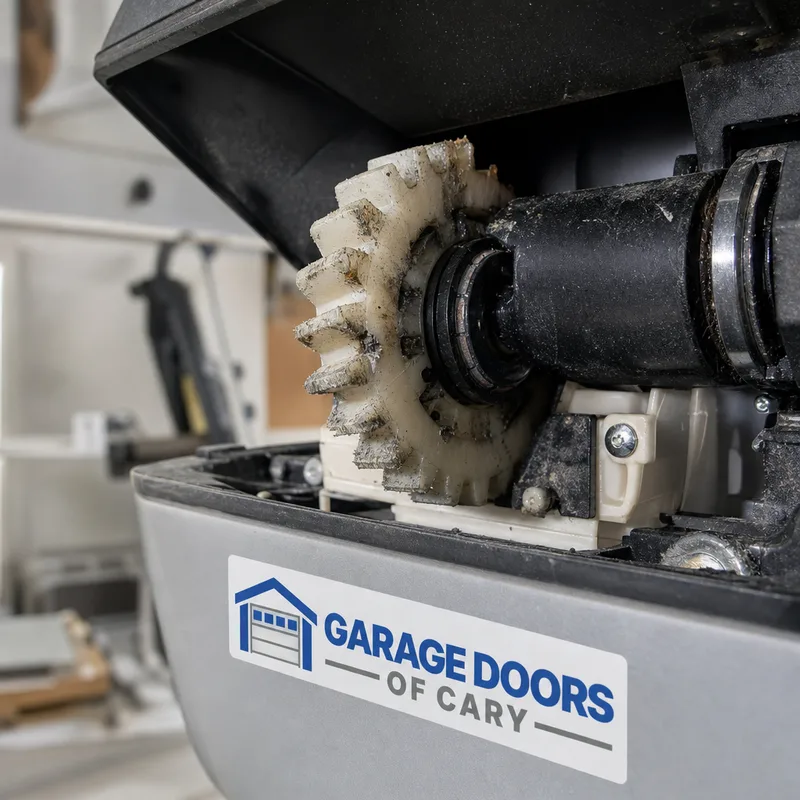
Chain, belt, or screw drives have common wear points: sprockets, gears, tension, and the trolley. Grinding, rattling, or slipping often points here and falls under garage door motor repair and related drive components.
If limits are wrong, the opener may stop short, push too far, or reverse. A contractor will verify travel limits and force settings so the door seals properly without stressing the system.
Surges, failing capacitors, and board faults can cause random behavior or total failure. Troubleshooting includes checking outlet power, wall control, and internal diagnostics when available.
Four straightforward steps
Share what the opener does—hums, clicks, runs but doesn't move the door, reverses, or loses remote range—the opener brand if you know it, and whether the door can be lifted by hand when released.
The contractor typically inspects the door's movement, checks sensors and wiring, confirms the condition of the rail, trolley, and drive, and looks for signs of binding or a door that is out of balance.
If the unit is repairable, the contractor may replace wear parts, adjust limits, or resolve control and sensor problems. If parts are obsolete or the motor or board is failing, you'll be offered replacement options that fit your setup.
After the work, the system is tested through full open and close cycles, safety reverse is checked, remotes and keypad can be reprogrammed, and app pairing for smart models can be confirmed.
If your opener is acting up, describe the symptoms once and we'll connect you with a Cary-area contractor who handles automatic and smart opener systems.
CALL NOW: (984) 400-4576Opener parts and installations
Answers before you call
A simple clue is how the door feels when it's released from the opener: if it's hard to lift, doesn't stay in place, or feels jerky, the door hardware or spring balance may be the main issue. If the door moves smoothly by hand but the opener struggles, clicks, or runs without moving the trolley, the problem is more likely inside the opener, drive system, or controls.
The most useful details are the opener brand and model, whether it's chain, belt, screw, or wall-mounted, and the exact symptom. If the opener has diagnostic lights, note the pattern, and mention whether a power outage or storm happened around the time the issue started.
Reversing is often tied to sensor alignment, an obstruction, or travel and force settings that make the opener think it hit something. A contractor will also check for a binding door, frayed cables, or track issues that increase resistance during the closing cycle.
This commonly points to a stripped gear, broken trolley, disengaged carriage, or disconnected linkage at the door arm. On some units the motor runs but the drive isn't transferring power to the rail, which is why internal gear and sprocket inspection is a typical part of automatic garage door opener repair.
It depends on the opener model and what you want the system to do. Some openers accept an add-on controller, while others need a compatible unit for reliable phone control, monitoring, and guest access. The contractor can confirm compatibility and explain which route fits your setup.
Typically the old opener is removed, the mounting and rail position are evaluated, and the new unit is installed and adjusted to match the door's travel. The contractor then programs remotes and the keypad and tests safety reversal and sensor function through multiple cycles.
Sometimes, but it depends on the brand, frequency, and security protocol. When you speak with the contractor, mention any vehicle built-in buttons, existing keypads, and how many remotes you use so they can plan for programming or replacement as part of the installation.
You call and describe the opener problem once, and we route the request to an independent local contractor who handles this type of work. You'll talk directly with the contractor about scope, options, and scheduling, and you decide whether to move forward.
Describe what the opener is doing, what type it is if you know, and whether the door moves smoothly by hand. We'll connect you with a local Cary-area contractor who can troubleshoot the issue and explain the repair or replacement options.